
Custom Aluminum Die Casting | Complex, Lightweight & Cost-Effective Mass Production
Need complex geometries, repeatable quality, lightweight strength, and cost-efficient mass production? Custom aluminum die casting is your ideal manufacturing solution.
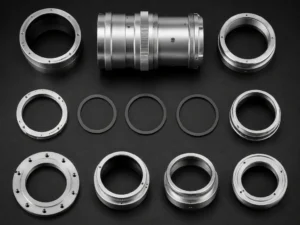
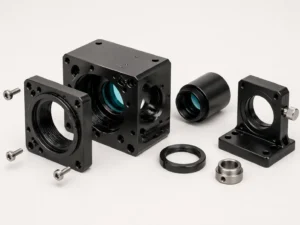
It is widely used to produce high-volume parts such as equipment housings, brackets, covers, motor components, heat dissipation structures, optical supports, and mechanical structural parts.
Die Casting vs. CNC Machining
Unlike full CNC machining, aluminum die casting delivers near-net-shape parts in a single forming cycle. It easily creates thin walls, integrated ribs, mounting bosses, and complex profiles.
For medium-to-large batch production, this process drastically cuts machining time, reduces material waste, and lowers unit costs — without sacrificing structural consistency.
Great die-cast parts don’t start with the casting machine. They start with design & DFM optimization.
Wall thickness, draft angles, ribs, bosses, parting lines, ejection marks, machining allowances, and surface finishes all determine the final quality, yield rate, and overall project cost.
When to Choose Aluminum Die Casting?
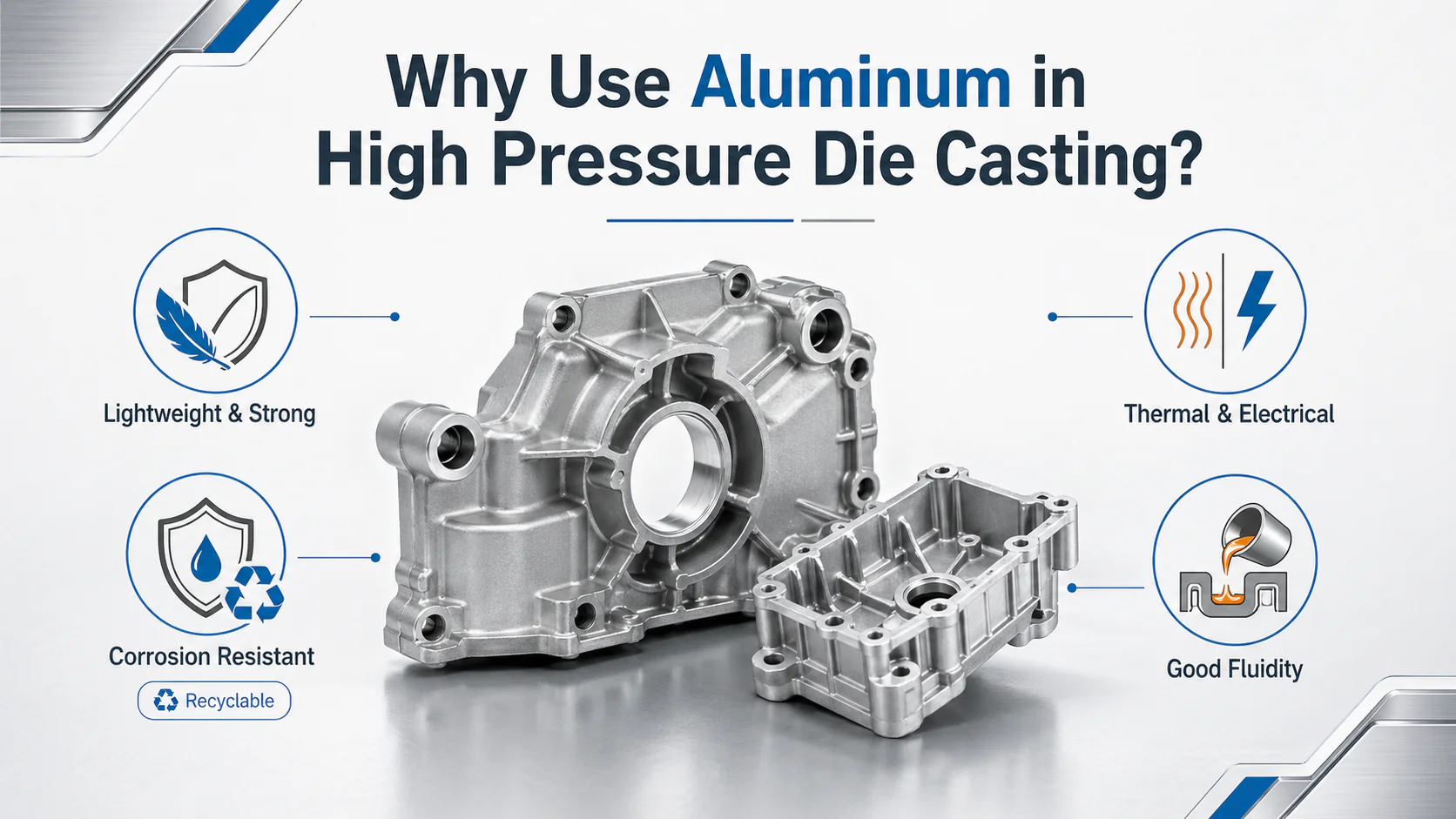
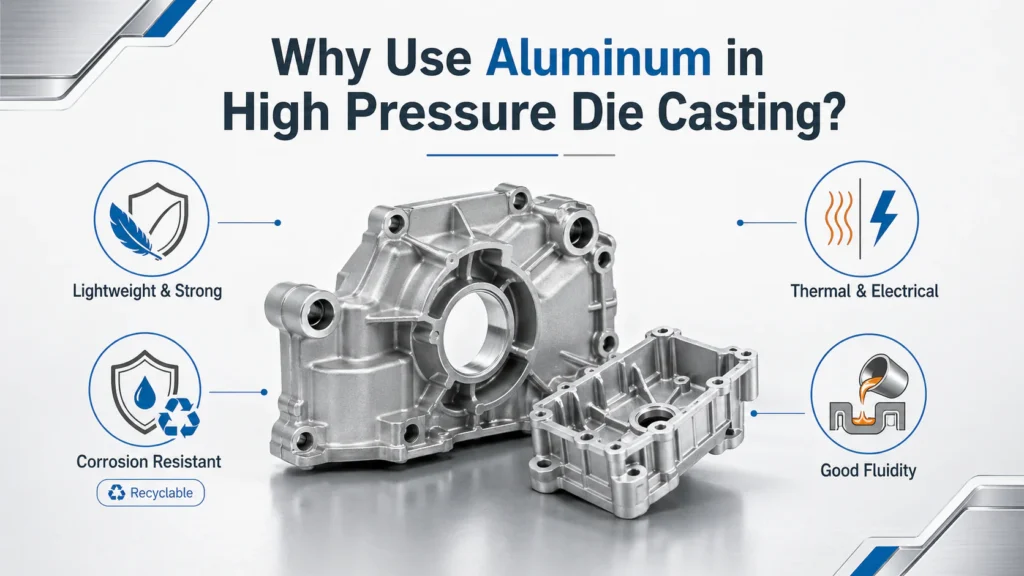
Aluminum die casting works best for components that require a balanced combination of light weight, structural strength, complex shapes, and high repeatability.
It is the perfect alternative for parts that would be too costly or inefficient to produce via solid aluminum CNC machining, especially for annual volumes of thousands of units or more. Once the mold is completed, mass production delivers consistent geometries and far lower unit pricing.
Best Applications for Die Casting
- Housings & Frames: Complex contours, thin walls, and versatile surface treatment options
- Supports & Brackets: Excellent strength-to-weight ratio and stable batch repeatability
- Motor Covers & End Caps: Precise mounting holes and post-machining interfaces
- Optical Mounts & Frames: Lightweight structure with critical CNC-finished surfaces
- Heat Sink Components: Integrated fins and rib structures for larger heat dissipation area
- Automation & Robot Parts: Balanced strength, productivity, and cost control
For low-volume prototyping, CNC machining offers faster flexibility. For high-repeatability, cost-sensitive mass production, aluminum die casting dominates.
Common Aluminum Die Casting Alloys
Die-casting aluminum alloys differ greatly from standard CNC alloys like 6061/7075. Material selection directly impacts castability, mechanical strength, corrosion resistance, machinability, and surface finishing results.
- ADC12: Stable fluidity for complex shapes | Ideal for housings, brackets, industrial components
- A380: Balanced mechanical performance | Widely used in automotive and electronic parts
- A383: Superior mold filling for ultra-thin walls | Perfect for complex thin-profile enclosures
- Al-Si Series: Reliable castability and structural strength | Standard for mechanical structural parts
- 6061 Aluminum: Common for CNC prototypes, rarely used for high-pressure die casting
For most custom projects, ADC12 and A380 are the mainstream choices, delivering stable filling performance and practical mechanical properties. We match materials with painting, powder coating, plating, and post-CNC requirements to meet your application standards.
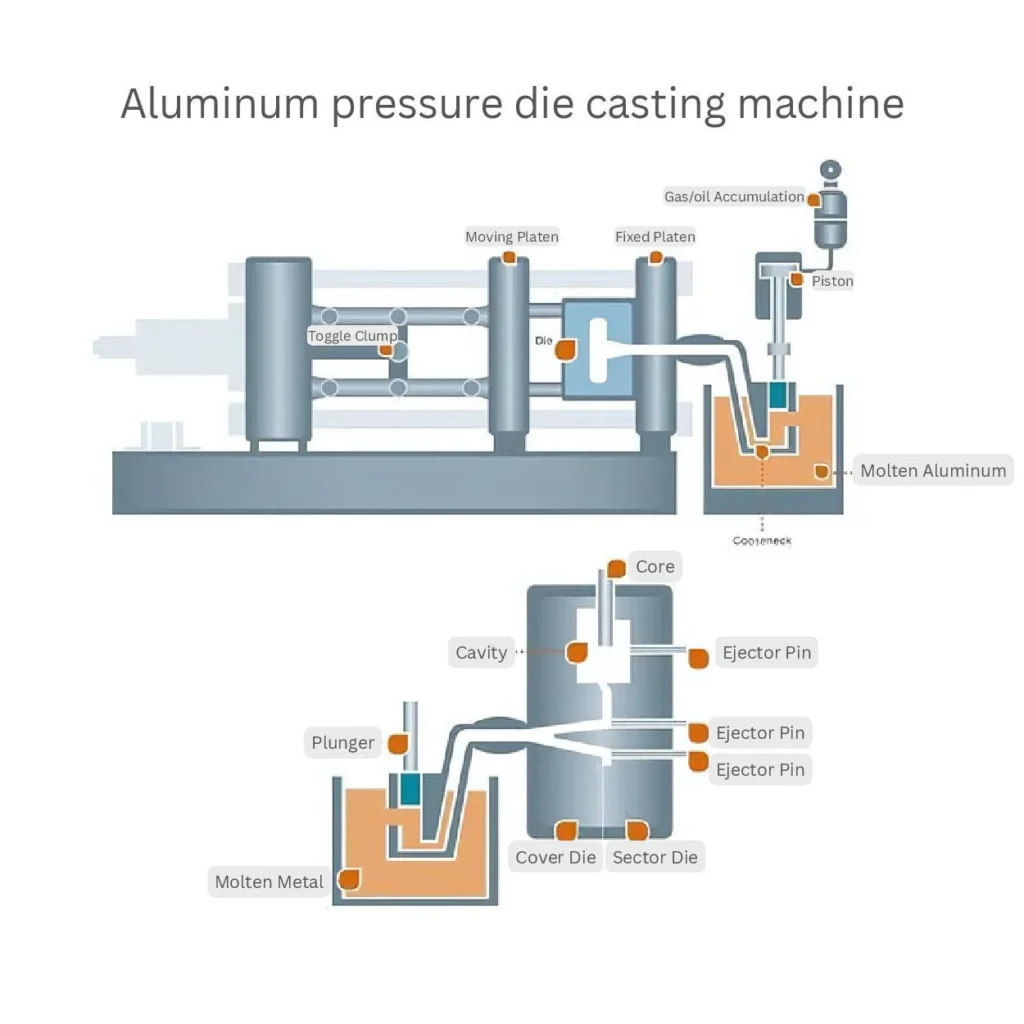
Key Design Factors Before Mold Making
Most die-casting defects — porosity, shrinkage, flashing, and deformation — stem from poor part design, not manufacturing errors. At Joint Precision, we conduct full DFM reviews before mold production to optimize:
- Uniform wall thickness to avoid shrinkage and porosity risks
- Strategic rib design for strength without extra material weight
- Proper draft angles for smooth ejection and reduced mold wear
- Round inner corners to improve metal flow and reduce stress concentration
- Optimized boss structure to prevent internal shrinkage holes
- Reasonable parting lines to avoid appearance and assembly interference
- Avoid ejection marks on cosmetic/sealing surfaces
- Mark critical CNC machining areas in advance
Design-optimized die-cast parts minimize mold revisions, stabilize mass production, and reduce overall costs.
Tolerance, Post-Machining & Surface Finishes
Die casting delivers consistent near-net shapes, but critical functional features require secondary CNC finishing.
- Cast-formed: Overall outline, ribs, protrusions, basic contours
- CNC-finished: Mounting surfaces, sealing faces, bearing seats, precision holes and threads
- Surface treatment: Sandblasting, painting, powder coating, anodizing, and conversion coating for protection and aesthetics
Our standard process:Die casting forming + CNC precision finishing on key interfaces + customized surface treatment — balancing low production cost and high functional accuracy.
Full Workflow From DFM to Mass Production
Stable die-casting production relies on standardized full-process control:
- 2D/3D file review & DFM analysis
- Design optimization & risk assessment
- Professional mold design & manufacturing
- T0 sample testing & dimensional verification
- Precision CNC post-machining
- Custom surface treatment
- Full inspection (CMM available) & quality confirmation
- Stable batch production & packaged delivery
Prototype sampling is critical to verify mold performance, shrinkage rate, and surface quality before mass production.
Information Needed for Accurate Quotation
To provide precise DFM feedback and pricing, please prepare:
- 2D drawings (tolerance, thread, surface finish standards)
- 3D models (geometry & mold feasibility check)
- Annual production volume
- Alloy material requirements
- Surface treatment & appearance standards
- Critical dimensions & post-machining requirements
- Application environment & inspection criteria
Partner with Joint Precision for Custom Aluminum Die Casting
We provide one-stop custom aluminum die-casting solutions for optical equipment, automation, robotics, medical devices, and industrial machinery.
Our services cover DFM consulting, mold development, die-cast production, CNC finishing, surface treatment, and strict quality inspection.
Have a new die-casting project or need design optimization? Send us your drawings and 3D files — our engineering team will deliver professional, manufacturable solutions.