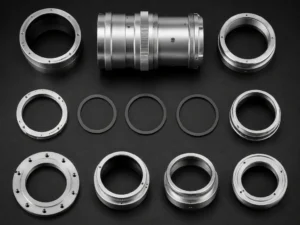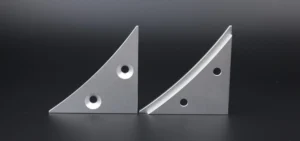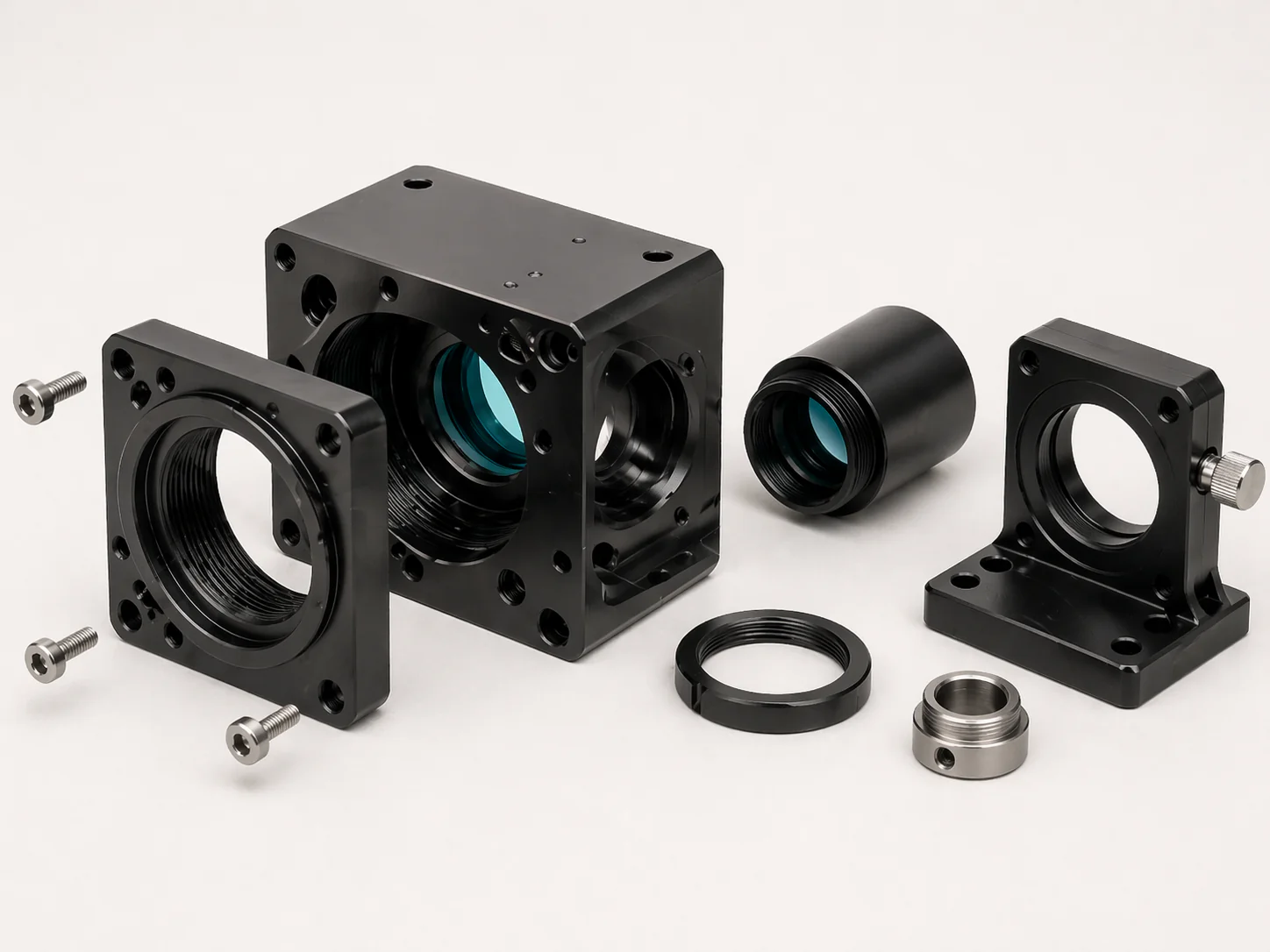

A housing is far more than an outer shell. It governs assembly accuracy, heat dissipation, sealing performance, optical alignment, cable routing and long-term mechanical stability. Tiny machining deviations on mounting surfaces, threaded holes, bearing seats, lens interfaces or connector cutouts can compromise the whole device’s performance.
Joint Precision manufactures custom CNC machined housings strictly per your 2D drawings, 3D models, material specs, surface finishes and assembly requirements. We deliver prototyping, low-volume runs and recurring mass production for aluminum, stainless steel, brass, copper and engineering plastic housings.
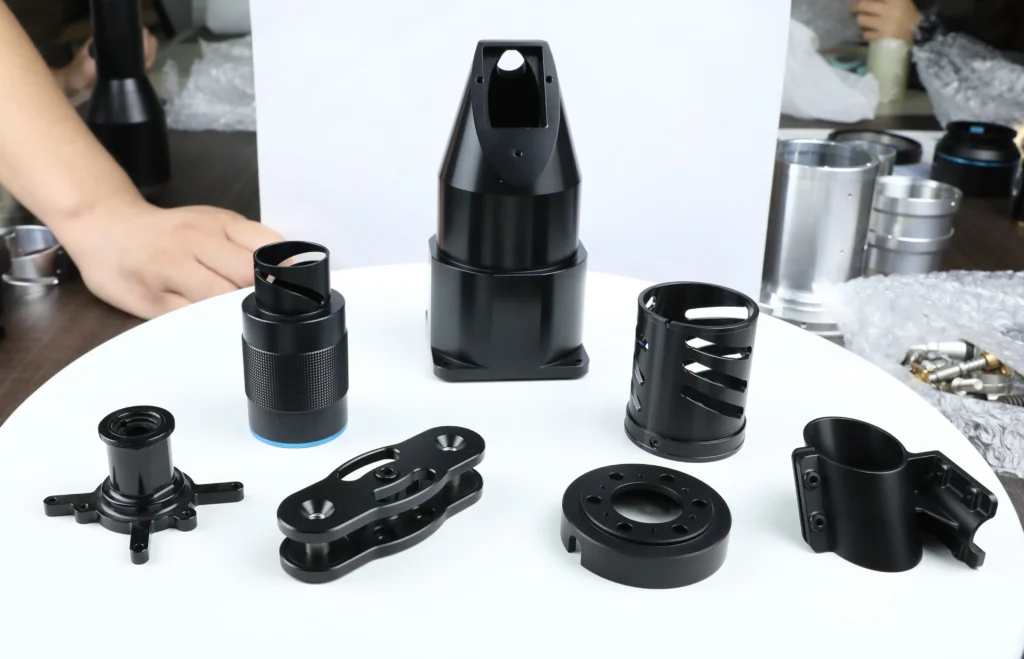
For optical, medical and sensor housings, flatness, hole position accuracy, perpendicularity, surface roughness and burr elimination are verified upfront before production launch.
🧾 Material Selection Guide
Material choice depends on strength, weight, corrosion resistance, thermal conductivity, surface treatment and end-use environment.
| Material | Advantages | Typical Housing Applications |
|---|---|---|
| 6061 Aluminum | Easy to machine, lightweight, excellent anodization | Optical, electronic & instrument enclosures |
| 7075 Aluminum | Higher tensile strength | Robotics, structural & aerospace housings |
| 304 Stainless Steel | Good corrosion resistance & rigidity | Medical equipment, industrial protective casings |
| 316L Stainless Steel | Superior anti-corrosion capability | Medical, marine & fluid system housings |
| Brass | Good machinability & conductivity | Connector shells, precision instrument fittings |
| Copper | Outstanding thermal & electrical conductivity | Heat dissipation casings, electrical components |
| POM (Delrin) | Low friction, stable dimensions | Light insulating mechanical housings |
| High-temperature engineering plastics | Heat & chemical resistance | Semiconductor & high-performance medical enclosures |
6061 aluminum is the mainstream option for most precision CNC housings thanks to balanced machinability, dimensional stability, light weight and reliable anodizing effects. Upgrade to 7075 for higher structural load; switch to 304/316L stainless steel for medical or corrosion-prone working conditions.
⚙️ Critical Machining Features & Key Control Points
Each functional zone of a custom housing requires targeted machining strategies:
- Mounting faces: Flatness, parallelism & uniform surface finish
- Threaded holes: Consistent thread depth, perpendicularity & burr removal
- Bearing seats: Tight diameter tolerance, roundness & coaxiality
- Connector cutouts: Position accuracy, sharp edges & controlled fitting clearance
- Sealing grooves: Precise width/depth, corner radii & surface quality
- Lens/sensor interfaces: Coaxiality, perpendicularity & low-reflection black finish
- Thin-wall sections: Anti-deformation & vibration suppression
- Heat sink fins: Uniform thickness, consistent spacing & burr-free edges
Even simple-looking housings often need multiple setups and tool changes. For complex structures, machining sequence matters more than cutting speed.
📏 Reference Tolerance & Surface Roughness Benchmarks
Avoid over-tolerancing every feature to cut unnecessary costs and cycle time:
- Standard housing dimensions: ±0.05 ~ ±0.10 mm
- Precision mounting features: ±0.02 ~ ±0.05 mm
- Critical bore & bearing seats: ±0.01 ~ ±0.02 mm
- Mounting face flatness: 0.03 ~ 0.10 mm
- Key interface perpendicularity: 0.02 ~ 0.05 mm
- Standard machined surface: Ra 1.6 ~ Ra 3.2 μm
- Fine machined surface: Ra 0.8 ~ Ra 1.6 μm
- High-end finished surface: Ra 0.4 ~ Ra 0.8 μm
Mark critical surfaces clearly on drawings for optical and sensor housings, so our team locks datums, inspection checkpoints and surface protection plans during processing.
📐 Design Guidelines for CNC Machined Housings
Optimized design shortens machining cycles, boosts precision and lowers manufacturing risks:
- Wall thickness: Unsupported ultra-thin walls are prohibited; minimum practical thickness for aluminum housings is 1.0–1.5 mm
- Internal corners: Add fillet radii to avoid tiny cutting tools and long processing time
- Deep cavities: Excessive depth-width ratio causes tool deflection and vibration
- Thread holes: Thread depth of 1.5D–2D meets most assembly demands; deeper threads waste processing time
- Sealing grooves: Explicitly define groove size, radii and surface finish
- Cosmetic faces: Mark visible surfaces to prevent fixture marks, scratches and tool transition traces
- Datum references: Confirm functional datums for assembly inspection
- Surface treatment: Reserve allowance for anodizing, plating or coating thickness
For anodized aluminum parts, coating thickness interferes with tight fits, threads and sliding surfaces. Masking or post-finish re-machining will be arranged as needed.
⚠️ Common Manufacturing Pitfalls & Solutions
Most housing defects stem from overlooked details rather than overall shape errors:
- Thin-wall deformation: Caused by overly thin walls, deep cavities or improper clamping force → ruins flatness and hole positioning
- Burr residue: Concentrated on threaded holes, cutouts and pocket edges, harmful for medical & electronic assembly
- Datum offset: Individual features may pass tolerance checks yet fail full assembly due to inconsistent datum positioning
- Surface treatment mismatch: Unaccounted coating thickness leads to undersized bores and over-tight fitting
- Cosmetic flaws: Scratches, fixture indentations and uneven anodizing lead to rejected finished parts
🎨 Full Surface Treatment Options
Match finishing processes to your functional and aesthetic requirements:
- As-machined: Internal structures, prototypes and non-critical functional parts
- Bead blasting: Uniform matte base finish prior to anodizing
- Anodizing: Aluminum housings, improved corrosion resistance & customizable colors
- Black anodizing: Optical housings, eliminates internal light reflection
- Hard anodizing: Enhanced wear resistance for high-friction positions
- Passivation: Anti-corrosion treatment for stainless steel
- Nickel plating: Improved conductivity, wear resistance and appearance
- Powder coating: Large enclosures for heavy protection & decoration
- Polishing: Decorative exposed metal surfaces
Black anodizing is standard for optical housings to suppress stray light. Selective masking is available for electronic housings requiring conductive grounding and EMI shielding. Medical-grade enclosures prioritize cleanliness, burr control and corrosion resistance over cosmetic appearance.
🔍 Standard Inspection Checklist
We prioritize critical functional features instead of equal measurement for all dimensions:
- Overall outer dimensions, mounting face flatness
- Hole position accuracy, bore diameter & thread quality
- Sealing groove dimensions, perpendicularity & coaxiality
- Surface roughness and exterior appearance
Measuring tools include calipers, micrometers, height gauges, pin gauges, thread gauges and roughness testers. CMM 3D coordinate measurement is applied for high-precision complex housings.
Label CTQ (Critical-To-Quality) dimensions on drawings, including bearing seats, lens interfaces, motor mounting holes, sealing faces, primary datums and connector positions.

📄 Information to Prepare for Accurate Quotation
Full details reduce back-and-forth communication and guarantee precise pricing:
- 2D drawings (tolerances, threads, surface finish & inspection standards)
- 3D CAD models (geometry, pockets, undercuts & tool access review)
- Exact material grade
- Order quantity
- Surface finish requirements
- CTQ critical dimensions
- Assembly matching requirements
- Cosmetic acceptance criteria
If material or finishing plans are undecided, our engineering team will offer optimized solutions balancing cost, performance, appearance and batch volume.
🤝 Partner With Joint Precision
We provide full-cycle custom CNC machining services for precision housings, covering prototyping, small batches and repeat mass orders. Our product range includes aluminum, stainless steel, brass, copper and engineering plastic enclosures.
Our engineers conduct pre-production DFM reviews covering material selection, tolerance feasibility, wall thickness, datum layout, surface roughness, burr risks and inspection schemes.
If you need custom CNC machined housings with stable dimensions, clean edges, precise interfaces and consistent surface quality, send over your drawings, 3D files, material specs, quantity and finishing requirements. Our technical team will deliver actionable manufacturability feedback promptly.